
Most Impact Reports Contain Strong Evidence.
The Best Ones Build a Clear Argument.
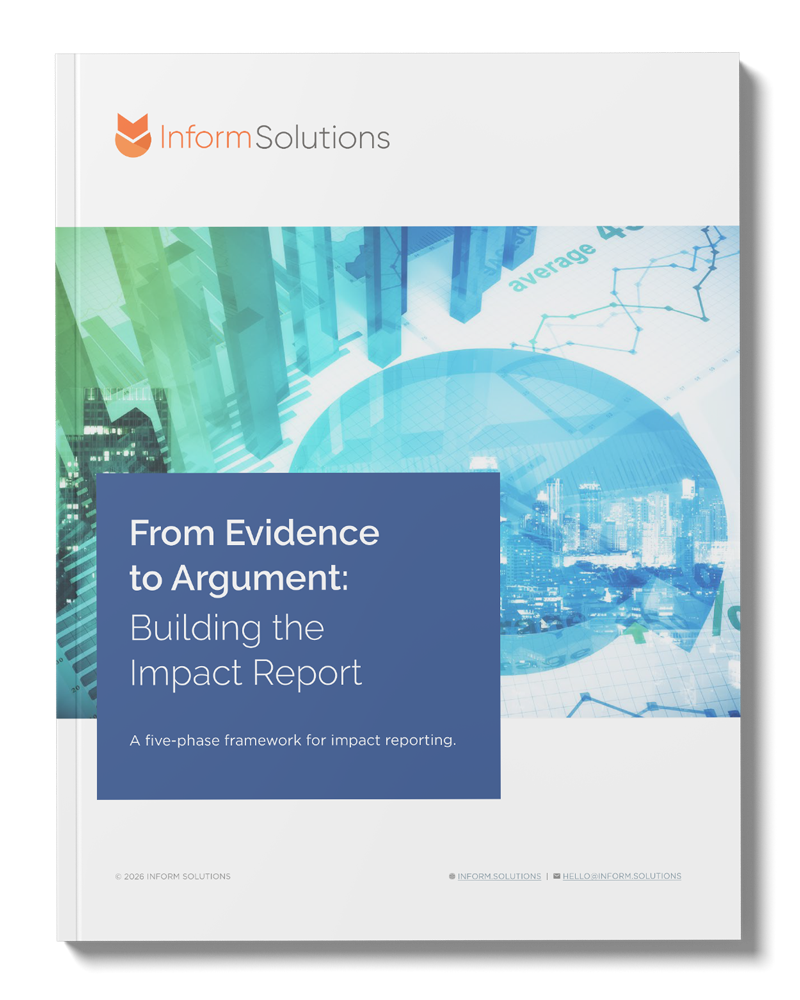
Learn a five-phase framework for creating impact reports that connect evidence to outcomes, strengthen credibility, and answer the questions investors, funders, and stakeholders actually care about.
Why Even Strong Impact Reports Fall Short
Many organizations invest significant time collecting data, measuring outcomes, and documenting their work. Yet reports can still leave readers asking, "What should I take away from this?"
The challenge is rarely the quality of the evidence. It's how that evidence is organized, explained, and connected into a clear, credible argument.
-
No clear reporting thesis
Readers should know what the report is trying to demonstrate and why it matters within the first few pages.
-
Evidence without context
Metrics, case studies, and methodology presented in isolation are difficult to evaluate.
-
Structure that makes readers do the work
When the narrative doesn't point clearly to the thesis, readers are left to draw their own conclusions.
-
Content that doesn't serve the reader
Strong reports lead with conclusions and speak to how different readers absorb information.
-
Design that competes with the message
Writing, visual hierarchy, and design should improve comprehension, not compete for attention.
Great reports start with a clear reporting thesis. This becomes the organizing principle for every decision that follows, from evidence selection to narrative structure and visual design.
A Five-Phase Framework for Impact Reporting
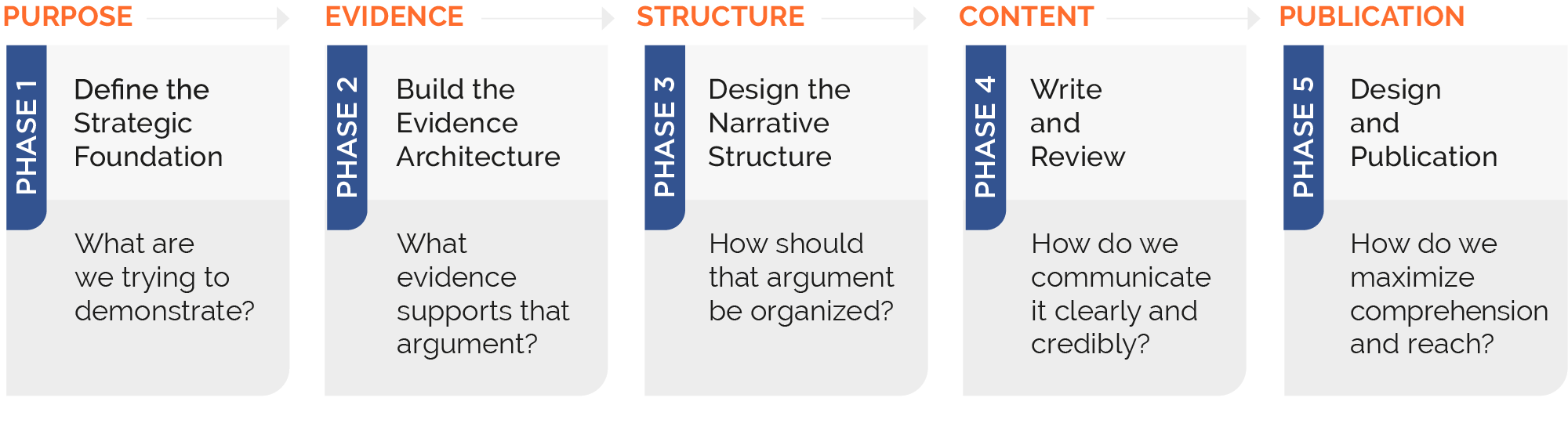
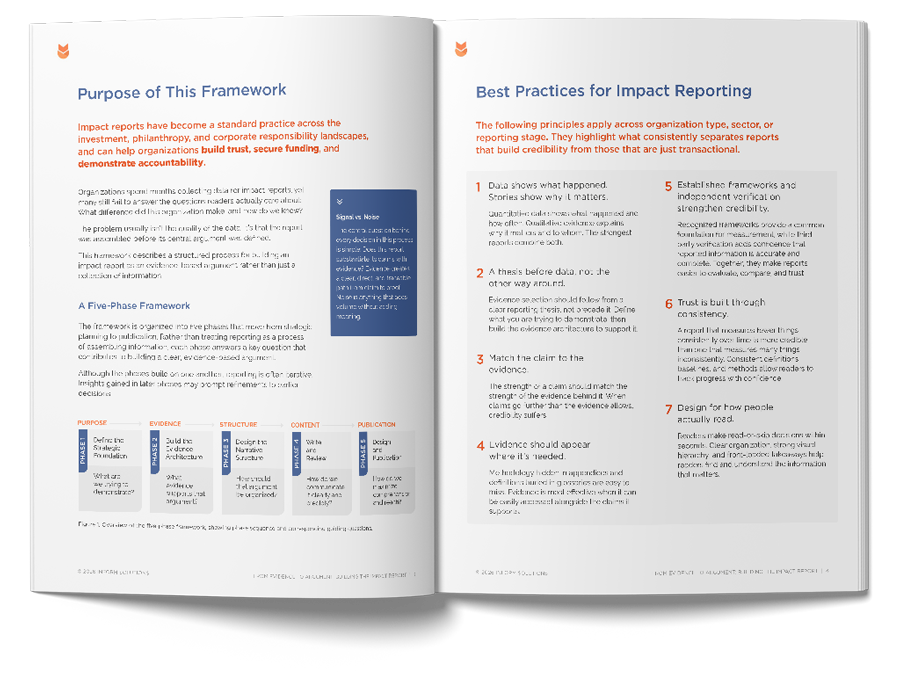
The framework is organized into five phases that move from strategic planning to publication. Rather than treating reporting as a process of assembling information, each phase answers a key question that contributes to building a clear, evidence-based argument.
Learn how to:
‣ Define a clear reporting purpose
‣ Build a defensible reporting thesis
‣ Distinguish outputs from outcomes
‣ Structure evidence that builds trust
‣ Organize reports around reader needs
‣ Balance data with narrative
‣ Improve accessibility and usability
‣ Plan distribution before publication
The Difference
Many reporting resources focus on what to include in a report, such as metrics, case studies, frameworks, and design. While those elements are important, they don't answer the more fundamental question: What is this report trying to demonstrate?
This framework starts with that question. The result is a report that is easier to understand, more persuasive, and better aligned with the needs of its intended audience.
| Typical Reporting Advice | This Framework | |
|---|---|---|
| Collect your data | → | Start with what you're trying to demonstrate |
| Tell your story | → | Build an evidence-based argument |
| Organize sections | → | Design around reader questions |
| Make it look good | → | Improve comprehension through design |
| Publish the report | → | Plan distribution from the beginning |
Download the Framework
Join founders, investors, and mission-driven organizations learning how to build more credible impact reports.
Inform Solutions works at the intersection of investment and communication. We've spent 15+ years helping impact investment firms and innovative organizations turn complex data into reports and publications that investors trust and stakeholders can use. Learn more.