
Does the Story Hold Up?
A Third-Year Review of Impact Reporting
Published by Inform Solutions
Updated June 24, 2026
This is Inform Solutions’ third year deep-dive into reviewing annual impact reports. As developers of annual impact reports, staying on top of trends and practices in this space helps us refine our own approach and test our framework against others'. While in prior years, we focused on design trends and formatting conventions, this year, we focused less on how reports look and more on whether their stories hold up. Can the claims be supported? Does the evidence match the narrative? Does the report communicate across audiences? In short, does the story remain credible under scrutiny and over time?
The reports that shine are not necessarily those that are the most design-forward or data-dense. Rather, the reports that rise to the top are those that prioritize clarity, evidence, and audience to tell a story that holds up over time.
As a disclaimer, Inform Solutions did not work with any of these organizations to produce their reports. Reports were selected to represent different sectors and organizational types. Most of the reports reviewed for this article were published in Q2 2026 and report on 2025 data. The publishing organizations are a mix of investment firms and retail companies. We have not included philanthropic/foundation reports in this review, as the review framework is different enough that it warrants its own focused review.
The Evolution of the Review
In year one, we reviewed a selection of 50+ 2023 impact reports to establish a baseline of general, high-level trends. We looked at design approaches, report formats, and publishing trends. We tracked key report topics and themes, as well as reporting frameworks.
The following year, we revisited most of the reporting companies from year one and reviewed their 2024 reports. We grouped this review into industry segments to explore sector patterns, continued to track design and publishing trends, and examined how messaging changed from the previous year in response to socioeconomic influences.
Now in our third year, we have sharpened our focus on communication integrity and clarity. We have honed in on a subset of the original group of reports and added a couple of new ones.
Our Review Framework
For each report, we looked at a series of criteria, developing a framework that emerged from years of analyzing what separates the standout reports. We evaluated how effectively each report established context from the start, whether the data and story were woven together in a meaningful way, if there was appropriate evidence to support the company’s claims, and if the report represented a clear commitment over time. We also identified whether the report communicated across three audience spheres: technical, public, and personal.
Technical: Verified data depth, framework references, metric definitions, and measurement methodology.
Public: How the organization positions itself within and contributes to larger systems of change.
Personal: Human experience and lived reality.
Four Observations Separating Strong Reports from Weak Ones
1. Strong Reports Establish Context Early
The reports that establish a clear, comprehensive context up front are the easiest to read and digest. They provide an anchor for the ‘who,’ the ‘why,’ and the ‘how’ that guides the reader's understanding throughout the report. Without this context, we see reports that read as a compilation of pieces that aren’t cohesive, with metrics that lack meaningful attachment to the company’s story. Specifically, the orienting context we were looking for included:
Company Information
A report should be able to stand on its own as a communication piece and not assume the reader already knows the organization. The inclusion of basic company information provides a foundation for why the impact matters and allows the report to stand on its own as a communication piece. Surprisingly, most of the reports in our review didn’t include this information.Impact Thesis
Organizations with a clear impact thesis produce the most coherent reports. The thesis is the backbone that gives everything else its shape.Report Overview & Scope
A reader shouldn't have to work to understand what they're reading. An organization that communicates clearly what it's reporting on demonstrates the kind of operational clarity that makes impact claims more credible.

In Vinted’s impact report, the CEO's letter states a clear belief in plain language and connects it to the business model, orienting the reader to what will be reflected in the report. It also establishes who Vinted is and what problem it exists to solve. The report continues by introducing the “Vinted Equation,” their thesis that informs the entire report's architecture. The rest of the report flows seamlessly, providing evidence for what is established in the intro.
2. Good Design Makes Evidence Visible
Well-planned, thoughtful design is a key part of the evidence delivery system. When the reader has to work too hard to understand the claims or find supporting evidence, the report loses the reader. Research shows that readers scan rather than read, processing visual information far faster than text and abandoning material that requires effort to navigate. When a report's most important context is hard to find or lives in a separate document, most readers will never see it.
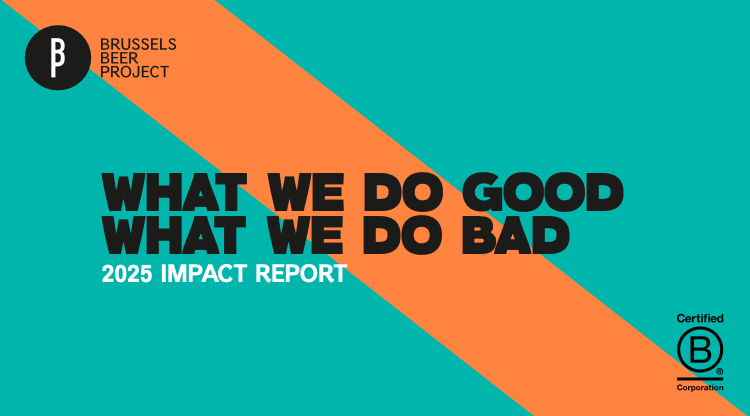
The Brussels Beer Project report showcases its evidence really well, integrating it into the reading experience rather than containing it only in an appendix. Methodology is where the claim is, and the third-party validator is named where the metric appears. Where there are links to supporting reports, these links are visually prominent.
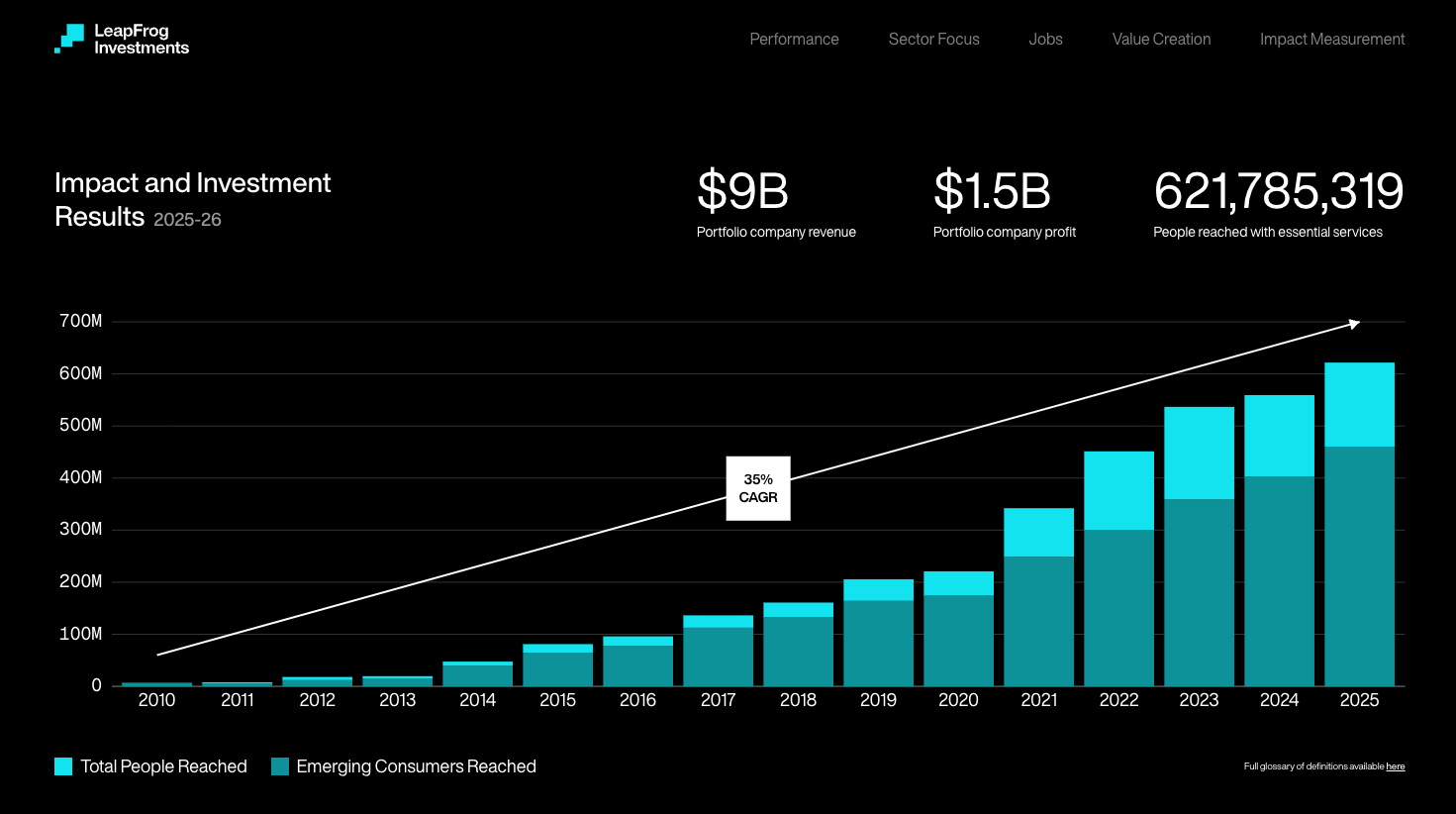
LeapFrog Investments’ report is backed by strong data that support its claims, and its digital report includes helpful + icons beside each metric that expand to provide more context. However, most of the methodology behind the figures lives in a separate glossary. This is linked at the very top of the report in very small text, and most readers will likely overlook this.
3. Data Alone Doesn't Build Trust
A report in which the data is strong but doesn't connect to lived experience will struggle to build trust across audiences. A report that positions a company as an impact leader but fails to provide evidence does not present a defensible story. Many reports communicate well with two of three groups. For example, investment firms often deliver robust measurement data along with messaging that highlights their role in the investment ecosystem, but do not include representation of the individual experience.
Quona Capital’s report speaks to all audiences quite well. It provides technical information for investors and partners, while offering context on the industry and how their approach is designed to drive change.
The impact story is supported by both company case studies and the voices of individuals.
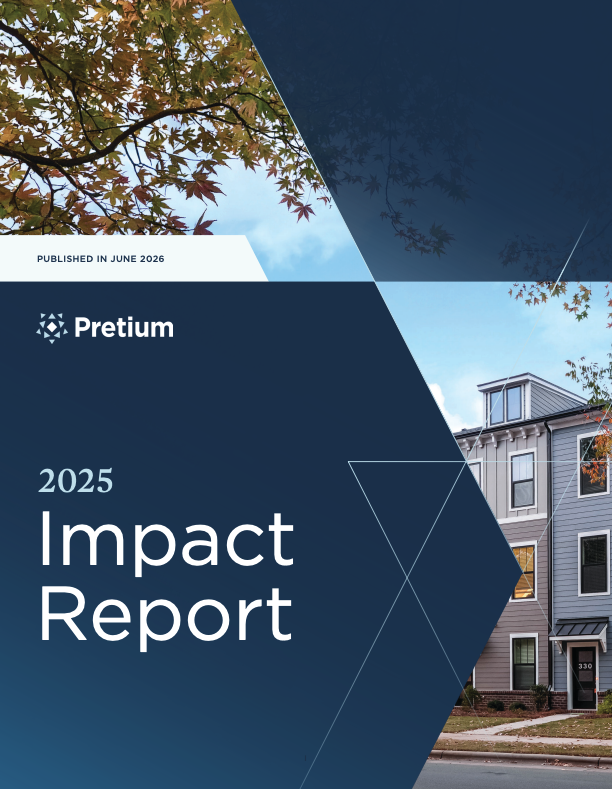
Pretium's report presents a strong data story and showcases field-building communications, addressing both technical and public audiences well. However, while there are some photos of individuals, there are no real resident voices, stories, or quotes. The absence of a human voice is a gap, as the core of Pretium’s impact story centers around solutions for renters and homeowners.
4. Execution Matters
Companies put real time and resources into impact reporting. When companies overlook fixable issues in their reports, it reduces the return on that investment. The observations above show that thoughtful planning goes a long way: build a strong report architecture, give attention to headings and formatting so readers can navigate with ease, lead with key information and support it with evidence, and communicate across all audience types.
Many organizations are shifting from PDF to web-based reports. This can work well, but the transition requires rethinking how references, footnotes, and supporting information are handled. Inline context becomes critical when you can no longer rely on a reader flipping to an appendix. Reports that rely heavily on transitions and animations can also end up distracting from the content rather than enhancing it.
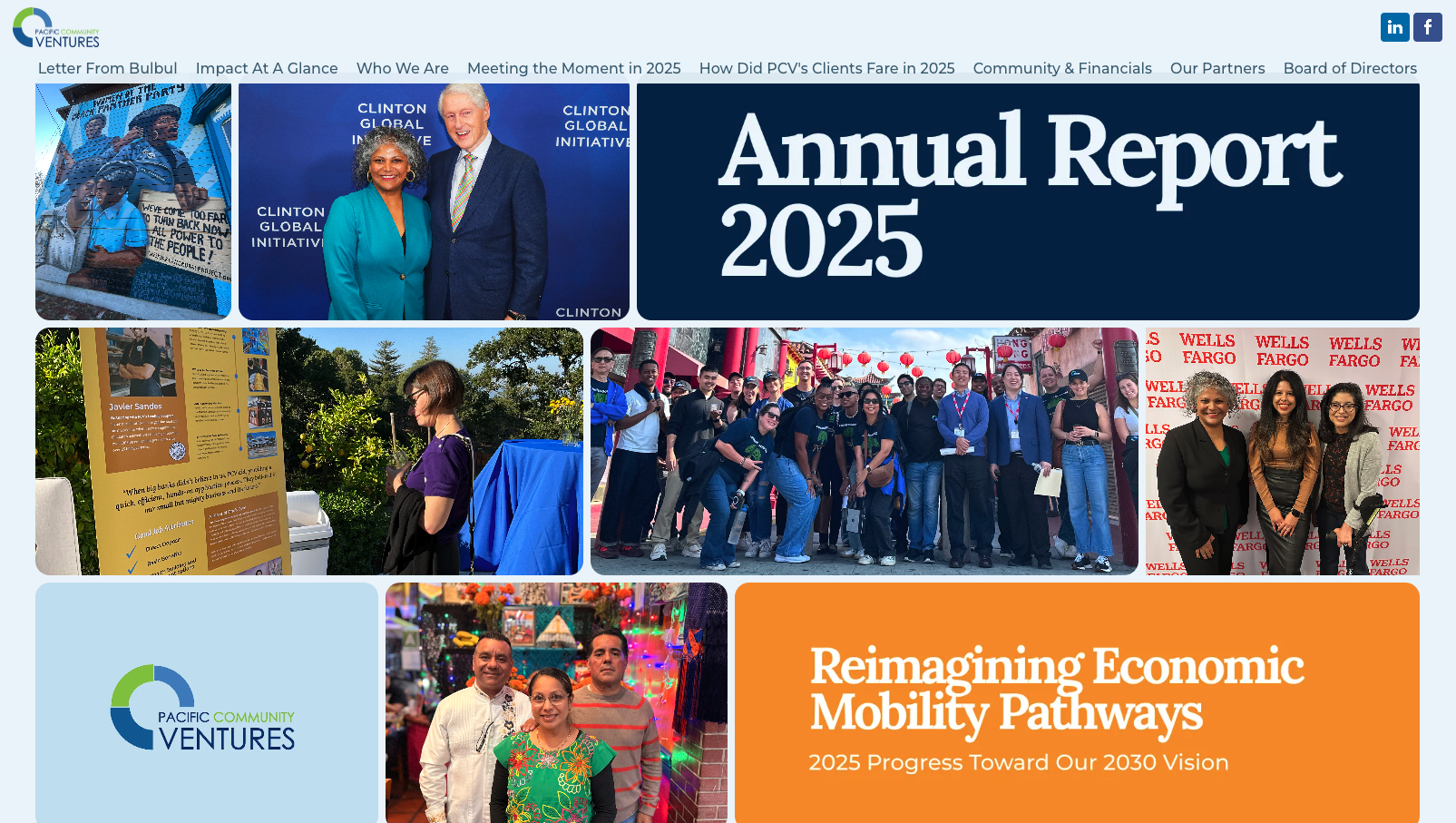
Pacific Community Ventures' web-based report was engaging and relatable, but the scrolling builds distracted more than they engaged, and the top navigation wrapped onto two lines, making the page layout inconsistent.
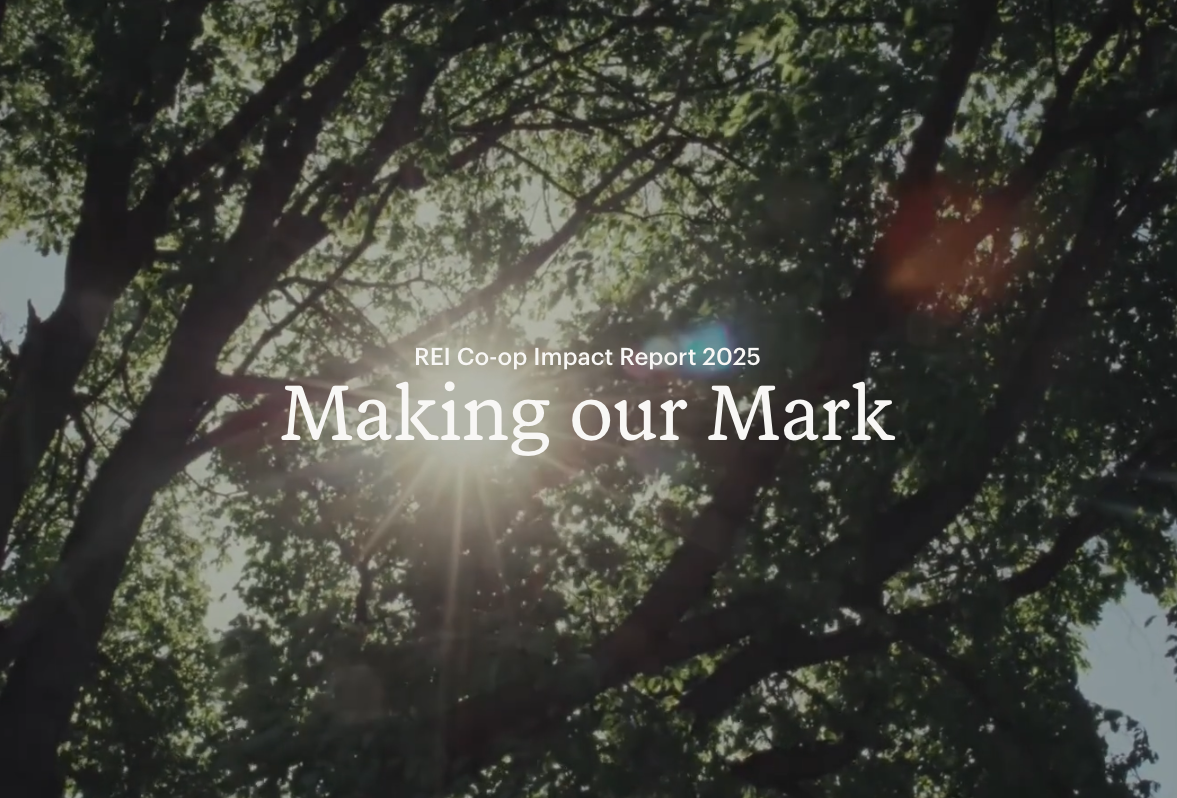
REI's web format handled inline context more effectively, though the report would have benefited from stronger visual communication.
Five Questions Every Report Should Answer
An impact report isn't just a compliance document or a marketing asset; it's an ongoing dynamic program. If you're building a reporting program or evaluating whether your current report is doing what you need it to do, the questions aren't complicated. But these questions are critical to strengthening the impact story that holds up over time.
Can a first-time reader understand who you are and what you're trying to achieve?
Does your data tell a story or just report numbers?
Does your evidence match your claims?
Does your report speak to all the people who need to trust you?
Does this year's report build on last year's rather than starting over?
Reports We Reviewed
[click images to enlarge]
Inform Solutions provides outsourced creative services to companies pioneering innovative products and services. Our mission is to clearly communicate and amplify the impact of innovators while actively contributing to a better future for our planet and society. Learn more at inform.solutions.